


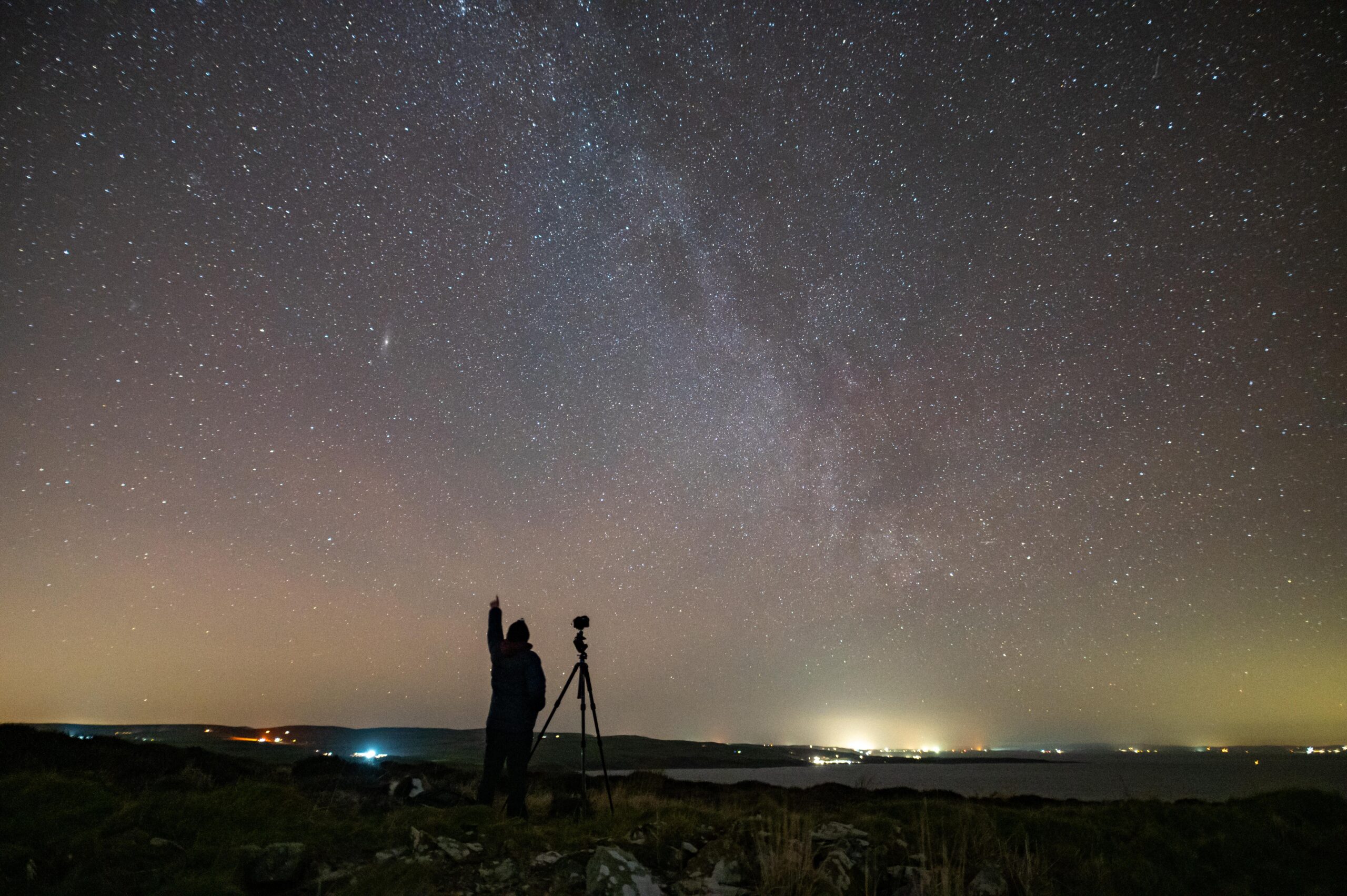
Galloway Forest Park Stargazing
Galloway Forest Park stargazing still evokes a sense that night still feels like night unlike many other places in this fine land.
In much of the modern world, the stars have quietly disappeared behind streetlights, traffic glow and the soft orange haze of towns and cities. But in Dumfries and Galloway, the darkness remains part of the landscape. Here, on a clear evening, the sky opens up: 7000+ stars are visible overhead, the Milky Way can stretch right across the horizon, and the quiet of the countryside makes the experience feel almost timeless.
For visitors looking for a different kind of Scottish escape, the dark skies of Dumfries and Galloway offer something rare. This is not just a place for walking, cycling, beaches and forest drives. It is also one of the best regions in the UK for stargazing, night photography and simply standing still beneath a sky that has not been washed out by light pollution.
Why Dumfries and Galloway is special for stargazing?
The heart of the region’s stargazing reputation is Galloway Forest Park. Covering more than 300 square miles, it is the largest forest park in Britain and one of the most atmospheric landscapes in south-west Scotland. Forestry and Land Scotland describes it as a place of dark skies, lochs, wildlife, mountain biking trails and wide-open natural beauty.
In 2009, Galloway Forest Park became the UK’s first International Dark Sky Park and one of the first such parks in the world. It was also awarded Gold Tier status for the quality of its night skies and the low levels of light pollution. You can read more about the area’s official dark sky status through Forestry and Land Scotland’s guide to dark skies in Galloway Forest Park. That makes it a truly special destination: not just a good place to see stars, but a protected landscape where darkness itself is valued.
VisitScotland notes that very few people live within the boundaries of Galloway Forest Park, which helps keep the night skies exceptionally clear. On a good night, visitors may be able to see more than 7,000 stars and planets with the naked eye, while the Milky Way is often visible overhead. For anyone used to city skies, where only a handful of stars can be seen, the difference is dramatic.
What is a Dark Sky Park?
A Dark Sky Park is an area recognised for its efforts to protect the night sky from artificial light pollution. It is not simply about being remote. It also involves managing lighting carefully, encouraging responsible outdoor illumination, and helping people understand why darkness matters for wildlife, people and the wider environment.
Galloway Forest Park’s designation is important because it places Dumfries and Galloway on the international stargazing map. DarkSky International’s profile of Galloway Forest Park notes that the park has a central core area set aside for preserving dark skies and wildlife, with a policy of no permanent illumination in that core. This means the area is not only beautiful by day, but carefully protected by night.
For travellers, this creates a rare opportunity. You can spend the day exploring forest trails, coastal roads, market towns and historic villages, then watch the whole character of the region change after sunset.
What are the benefits from stargazing?
- Health and Well-being
- Biodiversity Benefits
- Saving Energy
- Socio-economic Benefits
- Connect with Natural Universe
Galloway Forest Park Stargazing – Where to go?
There are several recognised places to begin a dark sky adventure. Scotland Starts Here’s guide to Galloway Forest Dark Sky Park recommends the visitor centres at Clatteringshaws, Glentrool and Kirroughtree as useful access points for stargazing in Galloway Forest Park. Each offers a different feel.
Clatteringshaws is especially atmospheric, with open views across the loch and surrounding hills. The reflections of the sky on the water can make it a wonderful place for photographers, especially on calm nights.
Kirroughtree, near Newton Stewart, is a good option for visitors who want a more accessible forest location. It is also known for walking and mountain biking, so it works well as part of a full day out.
Glentrool is ideal for those who want a wilder, more remote-feeling experience. Surrounded by forest, hills and lochs, it gives you that proper sense of stepping away from ordinary life.
If you are new to stargazing, you do not need specialist equipment. A warm coat, sturdy shoes, a flask, a torch with a red-light setting, and a little patience are enough to get started. Let your eyes adjust for 20 minutes, avoid looking at your phone, and choose a clear night around the new moon if possible. The darker the moon, the more dramatic the stars.
More than stars: the atmosphere of the night
Part of the magic of dark sky tourism in Dumfries and Galloway is that it is not only about astronomy. It is about the feeling of being somewhere quiet, spacious and unspoilt. The forests become silhouettes. The lochs turn black and glassy.
For couples it can be awe inspiring and relaxing at the same time. For families, it can be educational and memorable. For photographers, it is a chance to capture the Milky Way, star trails and night landscapes without travelling to the far north of Scotland. For me its about being at one with the landscapes and the earth in a peaceful setting. For anyone feeling tired by screens, traffic and busy schedules, it is simply restorative.
The region also sits within the Galloway and Southern Ayrshire UNESCO Biosphere, a landscape recognised for its natural and cultural value. The Biosphere highlights the area’s “sky above” as part of the visitor experience, including the Dark Space Planetarium in Kirkcudbright as a place to begin exploring astronomy in the region. This makes Dumfries and Galloway a great destination whether you want a wild outdoor experience or something more guided and family-friendly.
Make Gatehouse of Fleet your base
One of the best ways to enjoy the dark skies of Dumfries and Galloway is to choose a base that gives you access to both the coast and the forest. Gatehouse of Fleet is perfect for this. Set between countryside, woodland and the Solway coast, it is a peaceful village with character, history and a strong sense of place.
From Gatehouse, you can explore the wider region by day, then head towards the darker skies of Galloway Forest Park in the evening. It is close enough for a stargazing trip, but also offers the comfort of returning to a warm room, a good meal and a proper night’s sleep afterwards.
That is where The Ship Inn, Gatehouse of Fleet fits naturally into a dark skies itinerary. Located in the heart of the village, The Ship Inn is a small, family-run boutique hotel and restaurant with modern rooms, a pet-friendly restaurant, and a strong focus on local producers. Scotland Starts Here’s listing for The Ship Inn describes it as a friendly hotel in a quiet conservation village, with 10 en-suite guest rooms and a restaurant open for lunch and dinner.
For visitors planning a stargazing break, The Ship Inn offers the kind of base that makes the trip easier and more enjoyable. You can spend the afternoon walking around Gatehouse of Fleet, exploring nearby beaches or visiting Kirkcudbright, then enjoy dinner before setting off for a clear night under the stars. After a cold evening outside, returning to a cosy village inn feels like part of the experience rather than just somewhere to sleep.
A dark skies break is not just about looking upwards; it is about slowing down and enjoying the place you are in.
When is the best time to see the dark skies?
Autumn and winter are often the best seasons for stargazing in Dumfries and Galloway. The nights are longer, darkness arrives earlier, and there is more time to enjoy the sky before it gets too late. Crisp, clear evenings can be spectacular. Spring can also be excellent, especially when the weather is settled.
Summer has shorter nights, but it can still be beautiful, particularly for twilight walks, moonlit landscapes and late-night photography. The key is to check the weather, avoid heavy cloud, and aim for nights when the moon is not too bright.
Before heading out, it is worth planning sensibly. Rural roads can be dark, mobile signal may be patchy, and temperatures can drop quickly after sunset. Bring warm layers, let someone know where you are going, and choose recognised viewing areas if you are unfamiliar with the region.
A different kind of Scottish escape
The dark skies of Dumfries and Galloway are not loud or flashy. They do not need to be. Their appeal lies in quietness, space and the simple wonder of seeing the night sky as it should be seen.
In a world where so many travel experiences are busy, crowded and over-planned, this part of south-west Scotland offers something gentler. Walk by the sea. Eat well. Drive through forest roads. Watch the sunset fade behind the hills. Then, when the sky is fully dark, look up.
Whether you are planning a romantic weekend, a walking holiday, a family break or a peaceful retreat, Dumfries and Galloway’s dark skies are reason enough to visit. And with welcoming places like The Ship Inn in Gatehouse of Fleet offering good food, comfortable rooms and an ideal base for exploring the region, your stargazing adventure can feel both wild and wonderfully comfortable.
For more information on what’s on during our annual South of Scotland Dark Skies Festival 9th-18th October click the following link.
Discover the South of Scotland’s Dark Skies | South of Scotland – Scotland Starts Here
At the Ship Inn we intend running night swims during the week of the Festival coupled with Star Gazing Suppers. More info on Galloway Forest Park stargazing on our socials pages.
